

The contemporary global energy commodity market stands at a critical juncture, where short-term European gas supply security challenges intersect with long-term, structural shifts in Asian exploration policy. Analyzing these converging trends reveals a market defined by geopolitical friction, high price volatility, and a relentless strategic pursuit of energy resilience.
1. Europe’s Gas Rush: US LNG as the Anchor for Winter Supply
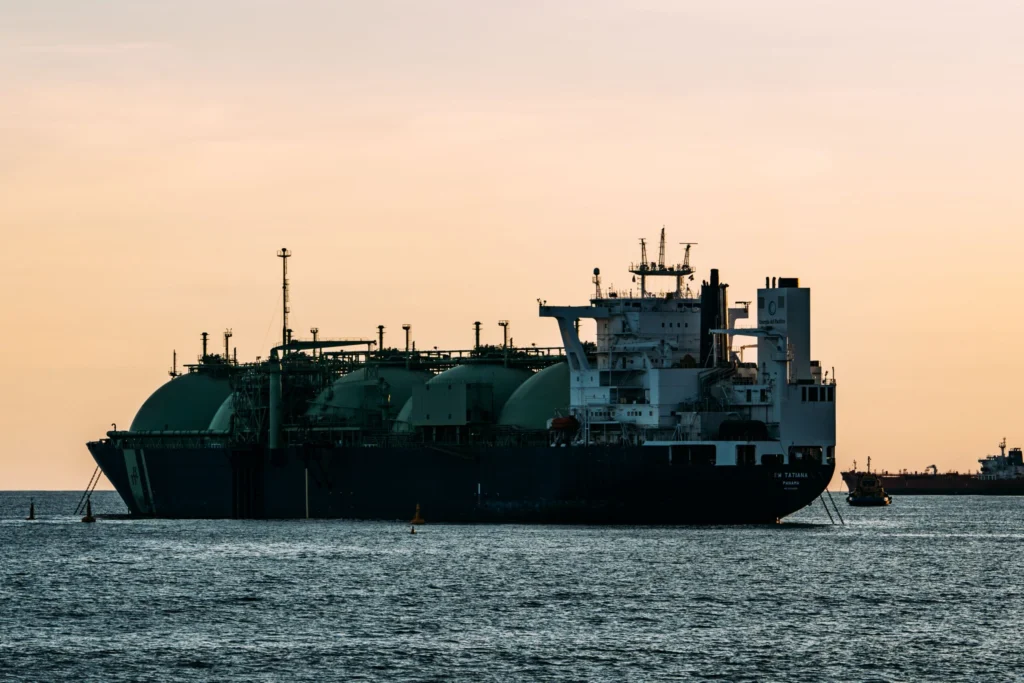
Against the backdrop of persistent geopolitical tensions, Europe is driving intense efforts to replenish its natural gas storage ahead of the upcoming heating season. S&P Global Energy CERA data indicates that over half of September’s US liquefied natural gas (LNG) cargoes headed to Europe. Combined, Europe and Turkey secured 76 out of 143 delivered shipments (roughly 53%), led by the Netherlands, Italy, Spain, Egypt, and France.
Meanwhile, EU-wide gas storage stood at just 72% as of early October, marking a significant drop from nearly 83% a year prior and 94% in 2024. This stark deficit explains Europe’s powerful pull on US supplies, drawing shipments away from the Asia-Pacific region, where the US export share dropped to 29%. Supply chains faced additional headwinds from annual maintenance at the Cove Point terminal in Maryland and a temporary train outage at the Freeport LNG plant in Texas. Consequently, global spot prices remain elevated and volatile, with the DES Northwest Europe benchmark hitting $23.56/MMBtu and Asia’s JKM settling at $25.569/MMBtu—more than double their year-ago levels.
2. India’s 'Samudra Manthan’: A New Frontier in Offshore Exploration
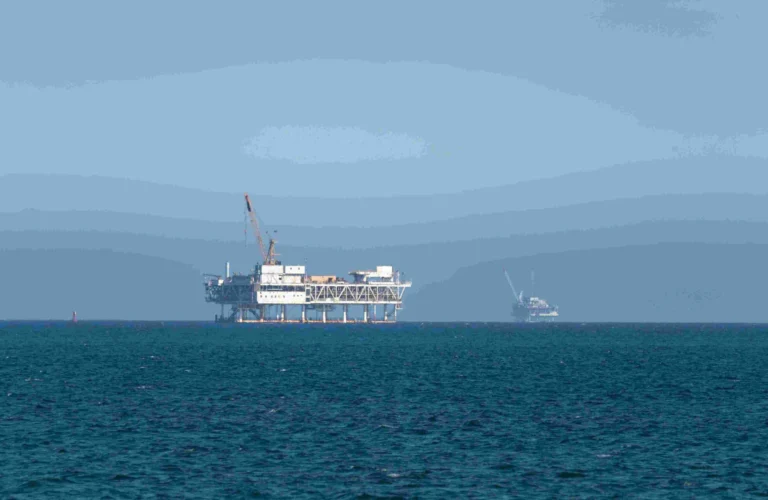
While Europe scrambles to balance immediate import needs via LNG, key Asian economies are taking structural steps to secure domestic hydrocarbon independence. India has accelerated its offshore potential through the Samudra Manthan initiative (National Offshore Exploration Scheme), backed by a cabinet approval of up to 840 billion Indian rupees ($8.8 billion) over five years.
Designed to overcome the immense cost and high failure risk of deepwater and ultra-deepwater drilling in basins like Krishna-Godavari and Mahanadi—where a single exploratory well can cost $125 million to $150 million—the program introduces a unique risk-sharing framework. The government will fund up to 50% of eligible exploration drilling costs, capped at $71 million per well. As highlighted by executives from ONGC, Oil India, and BP India, this policy fundamentally alters the economic calculus of a dry hole, opening up nearly 1 million square kilometers of previously restricted „No-Go” zones.
3. Market Synthesis The intersection of Europe’s immediate, storage-driven LNG import scramble and India’s bold, long-term upstream de-risking initiative highlights the duality of today’s energy landscape. For international traders, consultants, and platform operators at GTradX, navigating this environment requires balancing rigorous short-term logistics monitoring (terminal outages, spot price spreads) with a deep understanding of macroeconomic structural trends shaping global energy independence.