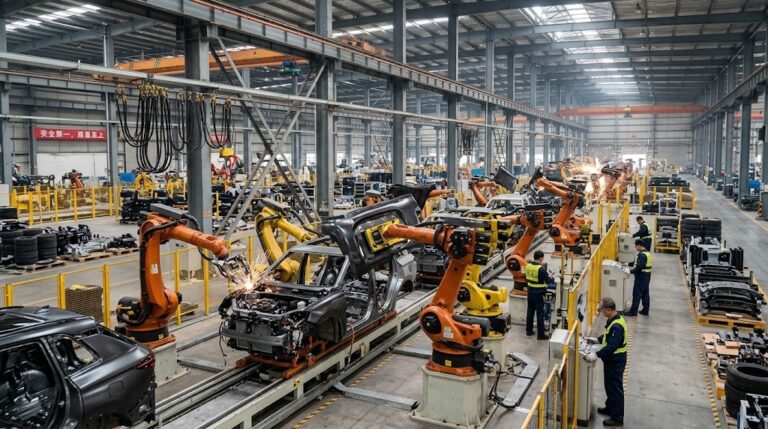



Brussels is actively drafting new policies to diminish the European Union’s economic reliance on China and shield domestic manufacturing from a flood of low-cost imports. A recently circulated document reveals that the European Commission’s trade department is designing a more aggressive and effective strategy to counter Beijing’s trade practices.
Proposed Defensive Measures To combat unfair competition, policymakers are evaluating several tools:
- Safeguard Investigations: Expanding probes into various sectors to determine if cheap imports are damaging local industries, which could lead to the imposition of strict tariff quotas.
- Overcapacity Instrument: Accelerating the creation of a mechanism targeting state-subsidized foreign companies that flood strategic markets with goods. However, this approach carries risks, as it may clash with World Trade Organization (WTO) non-discrimination rules.
Upcoming Timeline The proposed strategies will undergo rigorous discussion at several high-level meetings:
- May 29: Initial review during an orientation debate by EU commissioners.
- June 15: G7 summit in France, where leaders will discuss Chinese export restrictions on critical raw materials necessary for green technologies.
- June 18: European Council summit in Brussels, focusing on strategic autonomy and EU competitiveness.
Geoeconomic Context and Political Shifts Fears of deindustrialization are mounting across Europe, driven by a bilateral trade deficit with China that soared to €359.3 billion in 2025. European sectors like automotive and chemicals are already losing jobs due to underpriced Chinese goods.
Securing backing from Germany—a nation traditionally hesitant to escalate trade tensions but currently suffering industrial decline—will be critical. Furthermore, the political landscape is shifting: the departure of Hungary’s Viktor Orbán removes a significant pro-Beijing roadblock, although Spain’s Pedro Sánchez continues to advocate for closer ties. To further reduce dependence, the EU has recently introduced initiatives like the Industrial Accelerator Act to screen investments and a revised Cybersecurity Act to phase out Chinese tech giants like Huawei.