Prioritizing Sovereignty Over Semantics
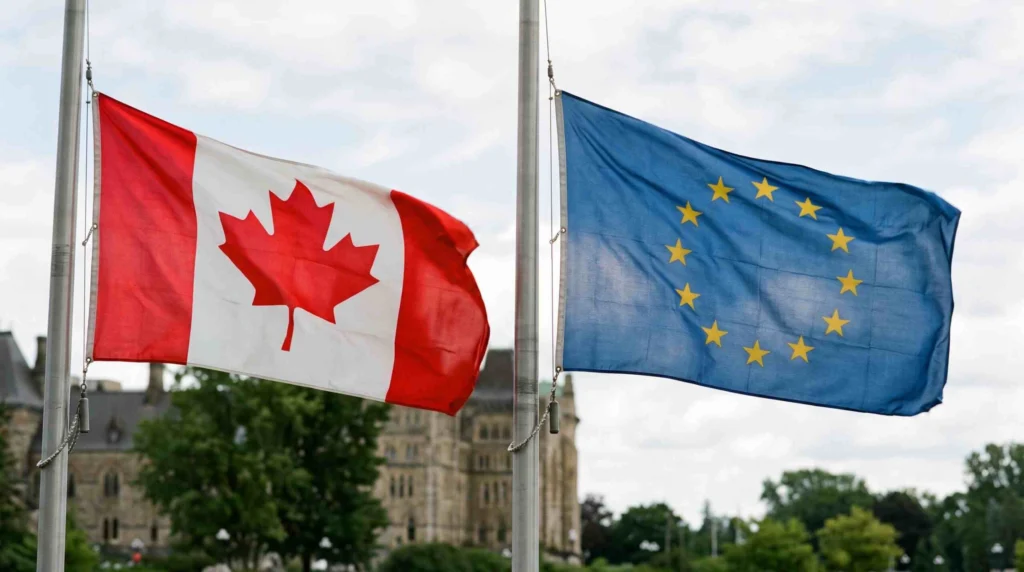
The new alliance forged between the European Union and Canada aims to bolster mutual economic sovereignty while carefully avoiding new geopolitical friction with Washington and Beijing. At the Montreal summit, Canadian Prime Minister Mark Carney dismissed the ongoing controversy over whether Canada should be labeled an „associate member” of the EU—a term floated by European Commission President Ursula von der Leyen in September that faced immediate pushback from Germany, France, and Greece. Carney emphasized that this relationship is not a marketing exercise, stressing that true value lies in practical complementarities across AI, critical minerals, and energy. This cautious „association without accession” strategy is particularly delicate as both sides navigate the final years of Donald Trump’s US presidency.
Securing Critical Minerals and Digital Trade
For the EU, Canada represents a vital opportunity to diversify its supply chains away from Chinese raw materials and Russian fossil fuels. EU officials highlighted Canada’s capacity to fulfill Europe’s demand for essential minerals and natural gas. The summit is expected to deliver concrete outcomes, including the conclusion of a new digital trade agreement negotiated since the spring, and a landmark pact allowing the European Investment Bank to fund Canadian critical mineral projects. With eleven EU commissioners in attendance, Canadian Finance Minister François-Philippe Champagne framed the summit as a historic opportunity to lock in a shared strategic agenda.
Diplomatic Maneuvering in Montreal
The summit, headquartered at the historic Fairmont The Queen Elizabeth hotel, featured a mix of high-level diplomacy and logistical friction, as jet-lagged delegates grumbled over decentralized event planning. European Council President António Costa deftly navigated the bloc’s internal naming dispute, backing both German Chancellor Friedrich Merz’s preferred „alliance for the future” and von der Leyen’s „associate member” ambition. By the afternoon, Carney adopted a blended terminology, signaling unity. Notably, while the energy and AI sectors stand to gain the most from this deepened partnership, the summit lacked the presence of two key figures: European Energy Commissioner Dan Jørgensen and Canadian Energy Minister Tim Hodgson.