


Exports Prop Up Growth Amid Domestic Stagnation China reported a 4.5% year-over-year economic expansion for the July-September quarter, accelerating from the 4.3% seen in the previous three months. This trajectory aligns with the lower end of Beijing’s official 4.5%–5% annual target and matches recent IMF projections for 2026. Yet, economists caution that headline GDP no longer paints an accurate picture of the broader economy. A booming export sector is currently papering over severe internal challenges, including a prolonged real estate crisis that has eroded household wealth and stifled domestic consumption. Furthermore, the reliance on high-tech manufacturing fails to deliver broad-based job creation, while AI-driven automation poses an additional threat to employment.
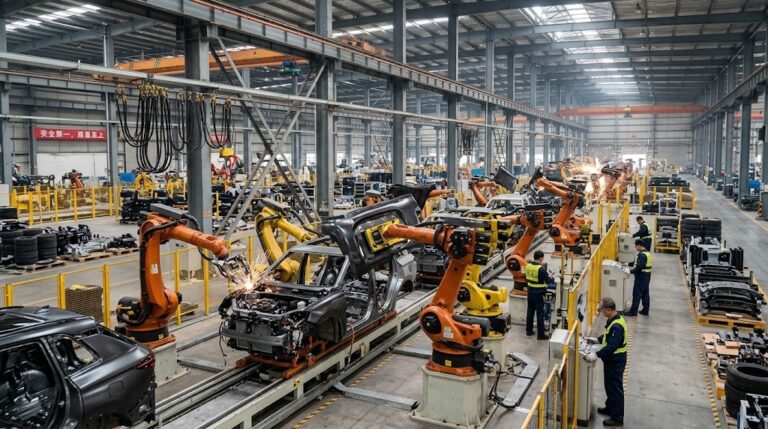
Subsidized Tech Floods Global Markets Faced with steep US tariffs, Beijing has successfully redirected its trade flows toward Europe, Latin America, and Southeast Asia. Driven by the pursuit of self-sufficiency, the government has heavily subsidized massive production capacities in sectors like semiconductors, solar panels, and electric/hybrid vehicles. Because domestic buyers cannot absorb this output, goods are dumped into international markets at highly competitive prices. Between January and September alone, China amassed a $938 billion trade surplus, positioning it to easily eclipse last year’s record of $1.2 trillion.
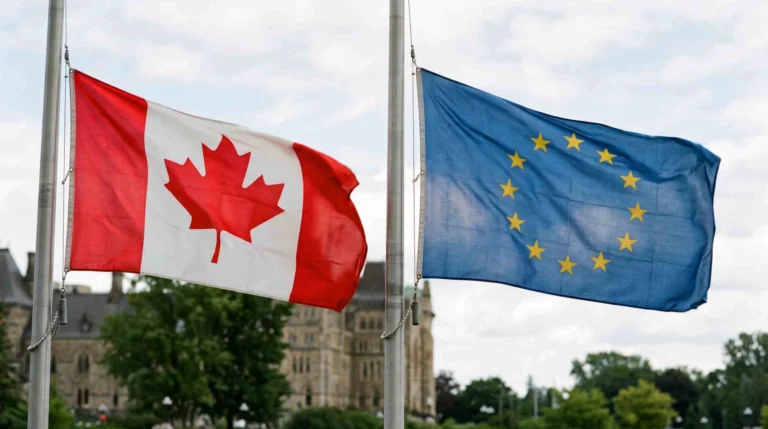
The EU Pushes Back Against Imbalances Trading partners are increasingly alarmed by the influx of cheap Chinese goods. Economists note that China’s reliance on foreign demand is not only unsustainable but also acting as a drag on global economic growth. The European Union is particularly eager to address its severe trade imbalance, which currently sees a deficit of over $1.1 billion a day with China. With Chinese exports to the bloc up 16% in the first nine months of the year, protectionist measures are accelerating. A prime example is the recent agreement to halve Chinese hybrid vehicle imports into the EU over the coming years. While China’s central bank governor, Pan Gongsheng, denies deliberately engineering the massive surplus or undervaluing the yuan—insisting the focus remains on boosting domestic consumption—analysts expect international trade barriers and tariffs to keep rising.